 |
||||||
 Outdoor Adventure Center Pratum Thani. Main Page The mission of TE Pratum Thani is to provide outdoor learning experiences which will challenge youth and adults to exceed their perceived boundaries as well as serve as a catalyst for personal growth and change. A ropes course is a high impact learning tool. Based on the tenets of experimental education, ropes courses have been proven effective by Outward Bound, Project Adventure and hundreds of similar programs. Programs at TE actively involve participants through challenges to the mind, body and spirit. Safety is of paramount
importance in ropes course programs. Our state-of-the-art course is
built to A.C.C.T. standards. Redundancy and strength of materials in
the course's safety system effectively reduce physical risk. Proper
staff and participant training is vital for the safety of the
individual and the group. After initial group activities, the
ropes course experience becomes significantly safer than every
day activities. Challenge is by choice. No participant is asked to
attempt any activity which does not feel safe. Programs at TE allow groups to address a wide range of issues relevant to professional and personal growth, group development and environmental understanding. Content areas may include:
Programs are custom
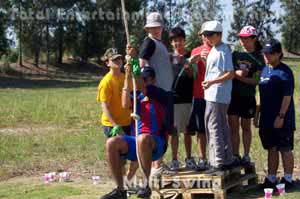
designed our experienced adventure education consultants. Challenge Course - Outdoor Adventure Group initiatives, also called teams courses or low ropes courses, are problems or obstacles that challenge groups both mentally and physically. These challenges require teamwork to be completed successfully. All participants must work together to accomplish the tasks and they act as safety systems for one another. These activities allow the trainer or facilitator to work right with the group, helping them deal with teamwork objectives, and preparing them for bigger challenges, such as a ropes course or the challenges found in the everyday world. Ropes Challenge Course programs typically involve small groups of participants over an intense period of hours or days, or in sessions over weeks or a semester, in a series of activities which increase in difficulty and focus variously on participants' physical, emotional, social, and intellectual capabilities. Ropes Challenge Courses are often used in conjunction with other forms of training or education, such as in physical education, in orientation programs, and for staff development. Ropes Challenge Courses can be used with school students through to adults and are readily adaptable to a wide variety of cultures, settings, and people with different abilities.
|
||||||
|
-----------------------------------------------------
|
||||||
|
|
||||||
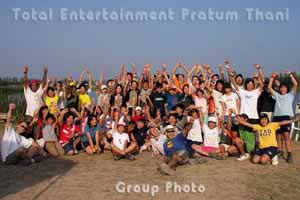
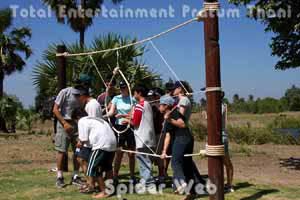 A custom built adventure center built for school groups, corporate team building, group parties and picnics.
 History
of Ropes Challenge Courses
History
of Ropes Challenge Courses